The full cast, properly introduced. Every ingredient named, with its origin and the traditions behind it.
Inside the Jar
No ingredients found for this filter.
Essential OilFloralCalming
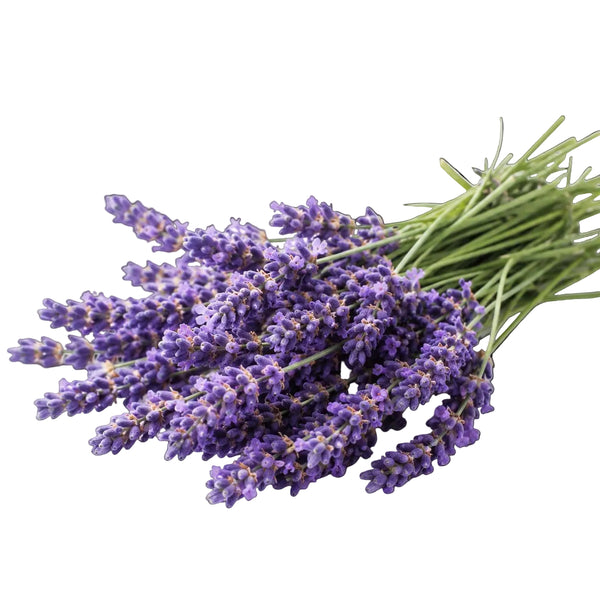
Lavender Essential Oil
Soft, floral and faintly sweet. The most widely used oil in aromatherapy and the cornerstone of bath and evening rituals.
Origin: Steam-distilled from the flowering tops of true lavender, Lavandula Angustifolia, cultivated around the Mediterranean for over two thousand years and grown today across Provence, the highlands of Bulgaria and the valleys of Kashmir. The Romans named it for lavare, to wash, and carried it into their public baths.
Aroma: Soft, floral, faintly sweet, with a green herbaceous edge and a whisper of wood.
Known for: The most widely used oil in aromatherapy. A mainstay of bath and pillow rituals, evening wind-down practices and skincare blends, and prized in Grasse perfumery for its clean, calming character.
The compound: Rich in linalool, the naturally occurring molecule behind its signature soothing scent.
Tradition & spirit: Greeks and Romans scented bathwater and laundry with it; Egyptians perfumed tombs with it; medieval European monasteries grew it in their physic gardens. In English and French folk practice, lavender was tucked into linens and hung at doorways for protection and peaceful sleep. Modern aromatherapy traces its founding to Rene-Maurice Gattefosse, the French chemist who turned to lavender after burning his hand in his laboratory in 1910. In planetary tradition associated with Mercury and the Moon, and in the chakra system with the crown and third eye, the centres of stillness.
Essential OilHerbalEnergising
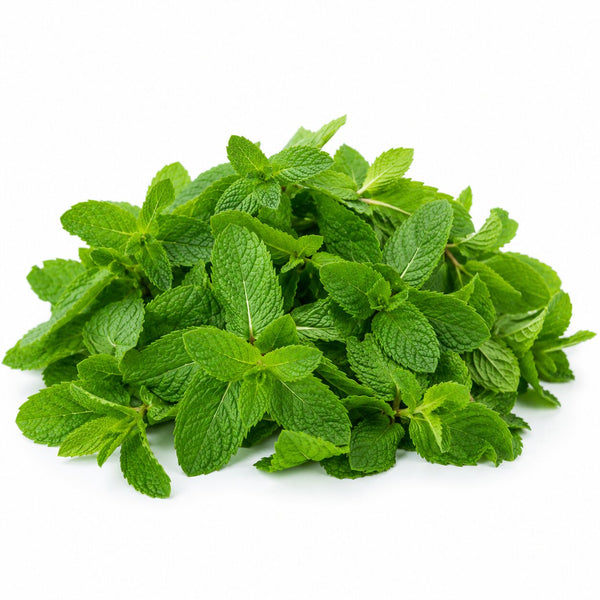
Peppermint Essential Oil
Sharp, clean and unmistakably cooling. The classic awakening oil, a ritual reset for mind and body.
Origin: Steam-distilled from the leaves of peppermint, Mentha Piperita, a naturally occurring hybrid of watermint and spearmint. The plant was formally classified by English botanist John Ray in 1696 and named piperita for its peppery warmth.
Aroma: Sharp, clean and unmistakably cooling, with a bright green lift.
Known for: A classic of aromatherapy and bath blends, reached for when a ritual needs to feel awakening and clear rather than soft. A staple in invigorating skincare, scalp blends and the world's chewing gums and toothpastes.
The compound: Rich in menthol, the naturally occurring compound that creates its signature cool, fresh sensation on contact.
Tradition & spirit: In ancient Greece, mint was a symbol of hospitality and guests were greeted by floors strewn with it. Dioscorides wrote about mint in his first-century De Materia Medica, and Romans wove it into wreaths and table garlands at feasts. The English garden tradition adopted it from medieval monastery physic gardens. Mercury's planetary herb, long associated with quick thinking, clarity and alertness. A scent of welcome, freshness and the awakening mind.
Essential OilHerbalEnergising
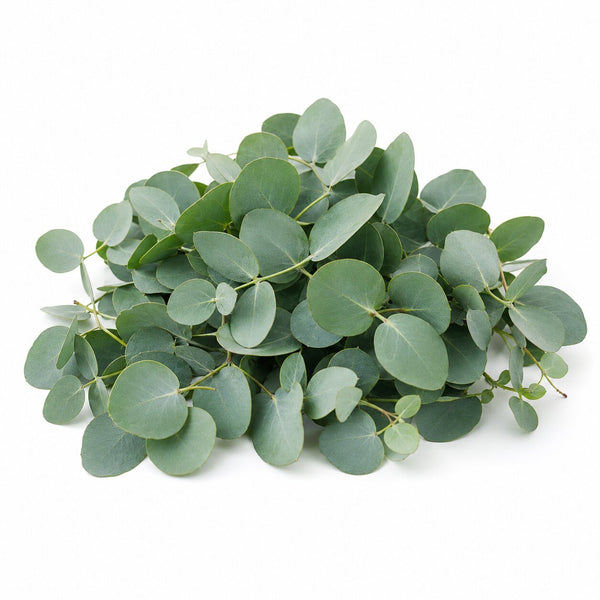
Eucalyptus Essential Oil
Crisp, camphoraceous and green. The scent of open, easy breathing, a steam-room in every soak.
Origin: Steam-distilled from the leaves of the eucalyptus tree, Eucalyptus Globulus, native to Australia where over seven hundred species grow. The first eucalyptus oil was distilled in November 1788 by Denis Considen, surgeon of the First Fleet, and it became Australia's first native export.
Aroma: Crisp, camphoraceous and green, with a clean opening freshness.
Known for: A mainstay of steam, bath and aromatherapy blends, loved for the sense of open, easy breathing its aroma brings to a ritual. Common in invigorating body and foot products and in steam-inhalation traditions worldwide.
The compound: Rich in 1,8-cineole, also called eucalyptol, the naturally occurring compound behind its bright, clearing scent.
Tradition & spirit: Known to the Dharawal people of the Sydney basin and to Aboriginal nations across the continent for tens of thousands of years, who used the leaves and the resin gum in daily life. The 19th-century Yorkshire-born pharmacist Joseph Bosisto opened the first commercial eucalyptus distillery in Victoria in 1852, sending the scent of Australian bushland into homes across the world. Associated with Mercury and with the element of air, a scent of freshness, breath and renewal.
Essential OilEarthyGrounding
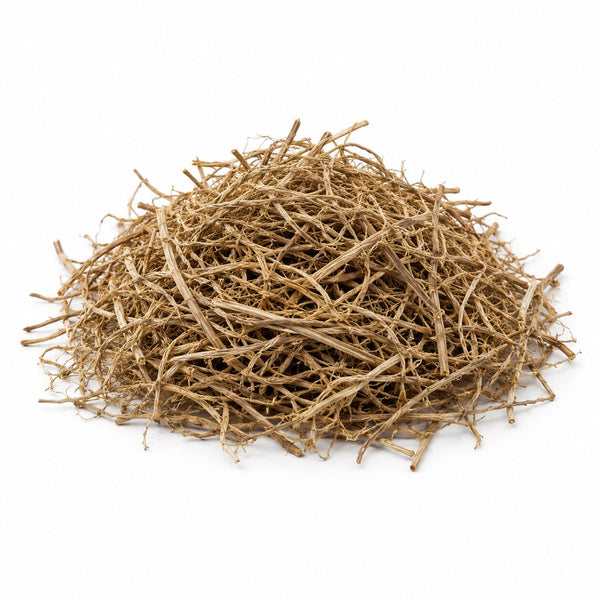
Vetiver Essential Oil
Smoky, earthy and deep, like rain on dry ground. The most grounding oil in perfumery.
Origin: Distilled from the deep roots of vetiver grass, Vetiveria Zizanioides, native to India. The name comes from the Tamil vettiver, meaning the root that is dug out. Tamil Nadu's red laterite soils produce vetiver considered by Indian perfumers to be the finest in the world.
Aroma: Smoky, earthy and deep, like rain on dry ground, with a quiet sweetness underneath.
Known for: Prized in Indian and French perfumery as a grounding base note and a long-lasting fixative, and the heart of countless Indian attars. A favourite in aromatherapy for the settled, anchored feeling its scent brings to a blend.
The compound: Rich in sesquiterpenes, the heavy, slow-evaporating compounds that give vetiver its lasting, grounding depth.
Tradition & spirit: Called ushira in Sanskrit and khus in Hindi, vetiver is named in Surapala's Vrikshayurveda (c. 1000 CE) and in the classical Ayurvedic texts of Charaka and Sushruta. For centuries, wealthy Indian households cooled their summer rooms with khus-tatties: screens woven from vetiver roots, dampened with water and hung in doorways so the breeze passed through and arrived cool and fragrant. Khus sharbat, a syrup of vetiver in cold water, remains a summer drink across North India and the Tamil diaspora. Associated with the earth element and the root chakra, a scent of grounding, stillness and protection.
Essential OilWoodyGrounding
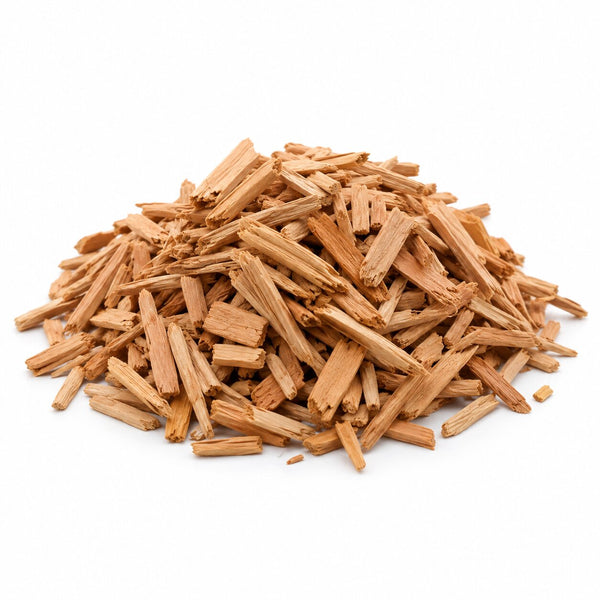
Sandalwood Essential Oil
Creamy, warm and woody. One of the most treasured meditation and perfumery notes in the world.
Origin: Distilled from the heartwood of Santalum Album, called chandan in Sanskrit, native to the dry forests of southern India and historically centred on the Mysore region of Karnataka, which gave its name to the most prized variety, Mysore Sandalwood. The species is listed as Vulnerable on the IUCN Red List.
Aroma: Creamy, warm and woody, soft and persistent, deepening as it sits.
Known for: One of the most treasured notes in fine perfumery and meditation across the world, loved for the still, settled quality its aroma lends to a ritual. A classic of luxury skincare, incense and aromatherapy.
The compound: Rich in santalol, the naturally occurring compound behind its creamy, long-lasting warmth.
Tradition & spirit: Central to Hindu and Buddhist practice for thousands of years. Sandalwood paste, chandan tilak, is applied to the forehead as a mark of devotion; sandalwood is burned as incense at temple aratis and used in funerary rites; and the wood itself has been carved into deities and ritual objects across India. Named in the Ramayana and the classical Ayurvedic texts, and the foundation of the attar industry of Kannauj. Associated with the crown and root chakras and with stillness in meditation.
Essential OilFloralRomantic
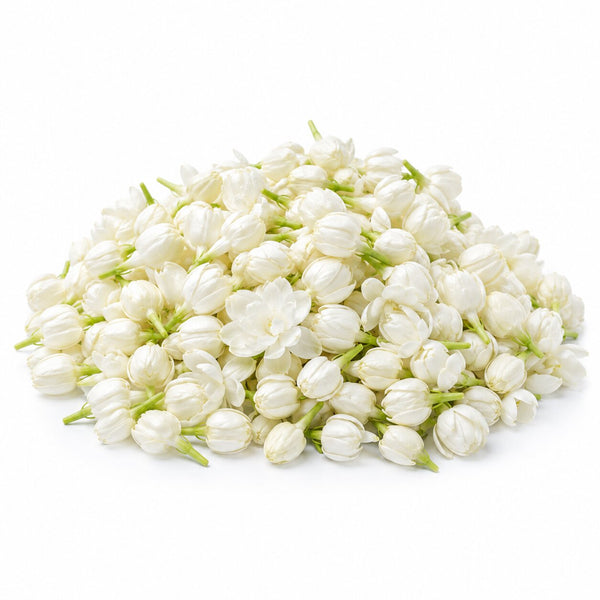
Jasmine Essential Oil
Rich, heady and intensely floral. One of the most precious florals in fine perfumery, warm and intimate.
Origin: Extracted from the night-blooming flowers of Jasminum Sambac, the mogra of Indian tradition and the sampaguita of the Philippines, where it is the national flower. The blossoms are gathered before dawn when the scent is richest.
Aroma: Rich, heady and intensely floral, warm and intimate.
Known for: One of the most precious florals in fine perfumery and a foundation of Indian attar-making, used sparingly for the warmth and sense of indulgence its aroma brings. A classic note of romance, celebration and devotion.
The compound: Rich in benzyl acetate and indole, the naturally occurring compounds behind its deep, opulent floral character.
Tradition & spirit: Across India, women braid jasmine strands into their hair every morning, and the flower is woven into bridal garlands and varmala for Hindu weddings. The flower is offered to Lakshmi and Vishnu and is closely associated with Krishna in the gardens of Vrindavan. Known as malligai in Tamil and mogra in Hindi. In the Philippines it is the sampaguita, historically exchanged as a pledge of love. Associated with Venus and the heart and sacral chakras, a scent of love, beauty and the warmth of being seen.
Essential OilFloralRomantic
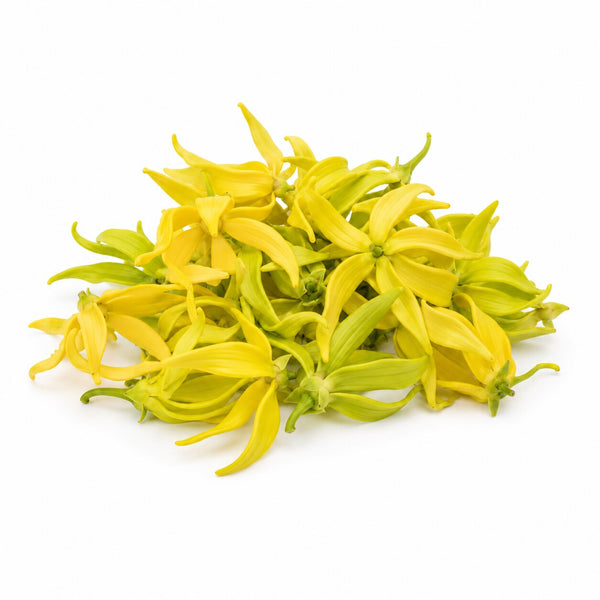
Ylang Ylang Essential Oil
Lush, sweet and exotic. A hypnotic floral with creamy depth, the flower of celebration and tenderness.
Origin: Distilled from the flowers of Cananga Odorata, the flower of flowers, native to the Philippines, Indonesia and the Comoros. Long used in fine perfumery, always sparingly, because it commands a room.
Aroma: Lush, sweet and exotic, a hypnotic floral with a creamy depth.
Known for: A celebrated perfumery floral and a backbone of classic compositions including Chanel No. 5. A favourite in indulgent aromatherapy and skincare, loved for the softening, sensual quality its aroma brings to a ritual.
The compound: Rich in linalool and benzyl benzoate, the naturally occurring compounds behind its sweet, narcotic floral richness.
Tradition & spirit: Scattered on the beds of newlyweds across Indonesia and the Philippines as a flower of celebration and tenderness. Associated with Venus and the heart and sacral chakras, a scent of romance, abundance and release.
Essential OilEarthyGrounding
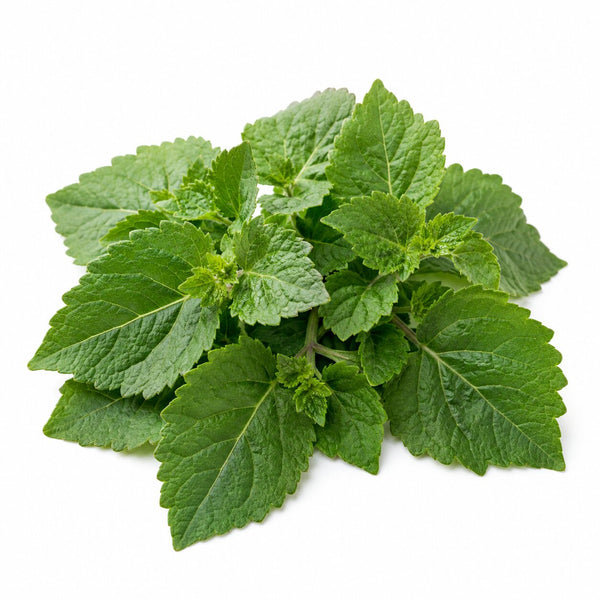
Patchouli Essential Oil
Deep, earthy and sweet, the scent that perfumed the cashmere shawls of the Silk Road. A perfumery legend.
Origin: Distilled from the cured leaves of Pogostemon Cablin, native to Southeast Asia. The scent that famously perfumed the cashmere shawls and silk fabrics traded along the routes from India to Europe in the 19th century, becoming a hallmark of luxury textile.
Aroma: Deep, earthy and sweet, with a rich woody-musky warmth that improves with age.
Known for: A perfumery base note and a treasured natural fixative, the grounded heart of classic oriental and chypre compositions. A favourite in aromatherapy and incense for the earthy steadiness its aroma brings to a blend.
The compound: Rich in patchoulol, the naturally occurring compound that gives it lasting depth and holds a blend together.
Tradition & spirit: Tucked among fine fabrics and coins in Indian export trade to signal authenticity and protect from moths. A favourite of perfumers and incense-makers across India and Southeast Asia. Associated with Saturn and the earth and root chakras, a scent of grounding, abundance and prosperity.
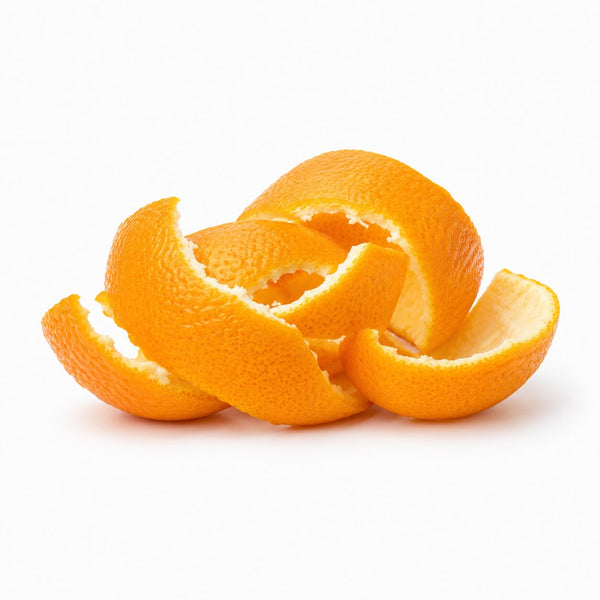
Essential OilCitrusEnergising
Sweet Orange Essential Oil
Bright, sweet and sunny, one of the most loved uplifting oils in aromatherapy. Pure liquid optimism.
Origin: Cold-pressed from the peel of sweet oranges, Citrus Sinensis. The original sweet oranges arrived in Europe through Portuguese trade with India and China in the 15th century and quickly became symbols of warmth, wealth and good fortune.
Aroma: Bright, sweet and sunny, juicy and instantly recognisable.
Known for: One of the most loved uplifting oils in aromatherapy and a favourite in bath, home and skincare blends for the cheerful, expansive lift its aroma brings to a ritual.
The compound: Rich in d-limonene, one of the most studied aromatic compounds for its fresh, mood-brightening scent profile.
Tradition & spirit: Oranges are a classic symbol of abundance, generosity and good fortune across cultures, offered at Chinese New Year, carried into Indian weddings and placed in European Christmas stockings as a sign of prosperity. Associated with the Sun and Jupiter and with the sacral and solar plexus chakras, a scent of joy, warmth and prosperity.
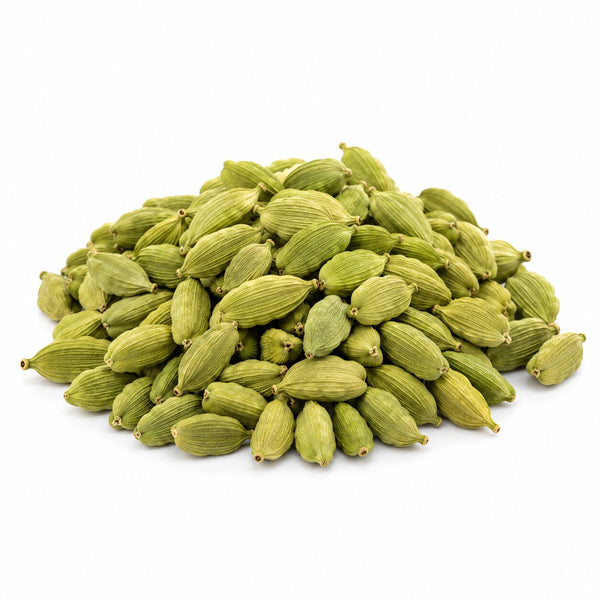
Essential OilSpiceWarming
Cardamom Essential Oil
Warm, sweet and spicy with a fresh eucalyptus lift. The queen of spices, India's gift to the world.
Origin: Distilled from the seeds of Elettaria Cardamomum, the queen of spices, native to the evergreen forests of the Western Ghats in South India and now also cultivated in Guatemala and Sri Lanka. India's southern hills, especially in Kerala and Tamil Nadu, remain the historical home of finest cardamom.
Aroma: Warm, sweet and spicy, with a fresh eucalyptus-like lift over a rich spice base.
Known for: A prized spice note in fine perfumery, a foundation of Indian masala chai and of Scandinavian baking, and a favourite in aromatherapy for the warming, expansive comfort its aroma brings to a blend.
The compound: Rich in 1,8-cineole and terpinyl acetate, the naturally occurring compounds behind its warm, lifted spice character.
Tradition & spirit: A classic Indian spice of hospitality, offered to guests after meals as a freshener and woven through the cooking of every region. Carried into the Middle East along the spice trade, it became central to Arabic coffee, where it is added to the pot in ceremonial welcome. In Jyotish tradition associated with Jupiter and expansion, and with the solar plexus chakra. A spice of generosity, warmth and auspicious beginnings.
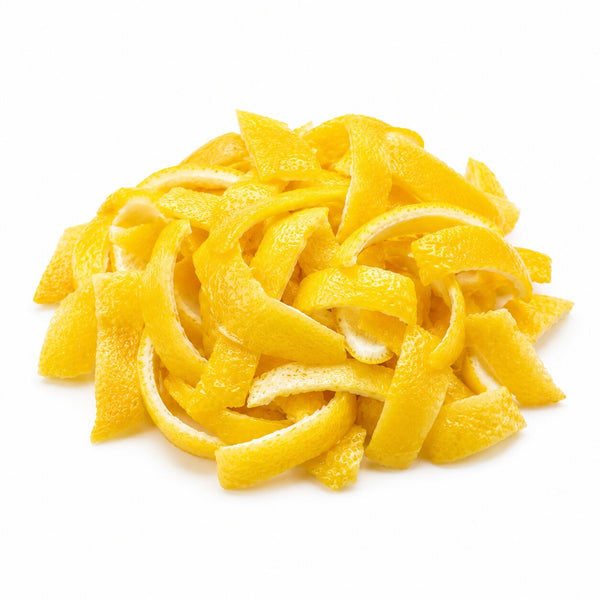
Essential OilCitrusEnergising
Lemon Essential Oil
Sharp, clean and zesty, a staple of uplifting aromatherapy. The scent of clarity and fresh starts.
Origin: Cold-pressed from the peel of fresh lemons, Citrus Limon, originally cultivated in the Indus Valley and carried west by Arab traders into the Mediterranean by the 10th century. Now grown across Italy, Spain and India.
Aroma: Sharp, clean and zesty, fresh and immediately clarifying.
Known for: A staple of uplifting aromatherapy and of fresh, clean skincare and home blends, loved for the bright, clarifying quality its aroma brings to a ritual.
The compound: Rich in d-limonene, the naturally occurring compound behind its fresh, sparkling citrus scent.
Tradition & spirit: In Indian folk practice, the nimbu is hung with green chilli at doorways and shop entrances to absorb nazar, the evil eye, and to clear unwanted energy. Across the Mediterranean, lemons have long been carried into new homes as a token of clean beginnings and prosperity. Associated with the Sun and Mercury and with the solar plexus chakra, a scent of clarity, freshness and cleansing.
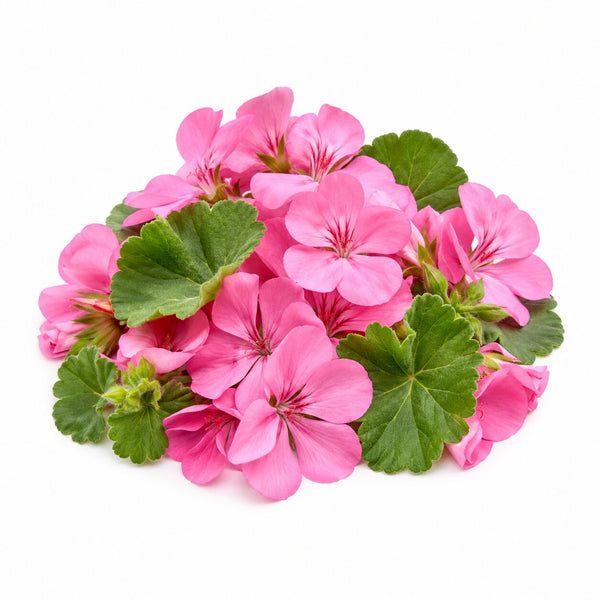
Essential OilFloralBalancing
Geranium Essential Oil
Rosy and green at once, sweet and herbaceous. A balancing favourite in fine perfumery and natural skincare.
Origin: Distilled from the leaves of Pelargonium Graveolens, a rose-scented geranium native to South Africa and now cultivated in Egypt, Reunion and India. Long planted in pots at Mediterranean doorways and on windowsills to scent the entrance.
Aroma: Rosy and green at once, sweet and herbaceous with a fresh floral lift.
Known for: A balancing favourite in fine perfumery and in natural skincare, and a classic aromatherapy note, loved for the settled, harmonising quality its aroma brings to a blend.
The compound: Rich in geraniol and citronellol, the naturally occurring compounds behind its rosy-herbaceous character.
Tradition & spirit: Across Mediterranean folk practice, scented geranium was planted at doorways and on windowsills as a quiet protector of the household, and its leaves were tucked into clothing and bed linen. In Victorian flower-language it stood for gentle steadiness. Associated with Venus and the Moon and with the heart chakra, a scent of boundary, balance and protection.
Essential OilCitrusEnergising
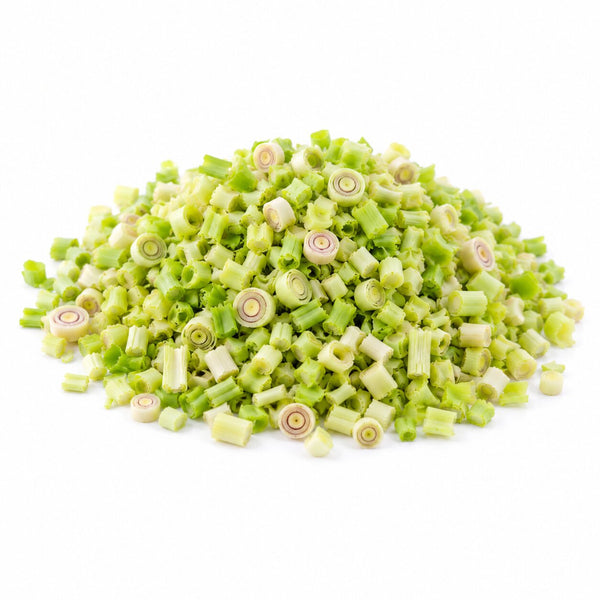
Lemongrass Essential Oil
Bright, lemony and green, sharp and energising. The grass of the earth and a scent of bright new starts.
Origin: Distilled from the tall grass Cymbopogon Flexuosus, native to India and grown across Southeast Asia. The Sanskrit name is bhustrina, grass of the earth, and the herb is a foundation of South Indian and Southeast Asian cooking and ritual.
Aroma: Bright, lemony and green, sharp and energising with a grassy edge.
Known for: A popular uplifting note in aromatherapy and in fresh, clean home and body blends, loved for the energising lift its aroma brings to a ritual. A staple of Thai cooking and Indian herbal tea.
The compound: Rich in citral, the naturally occurring compound behind its vivid, zesty citrus scent.
Tradition & spirit: Used across South Asian and Southeast Asian household practice to refresh and cleanse a space, and brewed as a herbal tisane after meals. A Sun-Mercury herb in Indian tradition, associated with the solar plexus chakra, a scent of brightness and fresh starts.
Essential OilWoodyGrounding
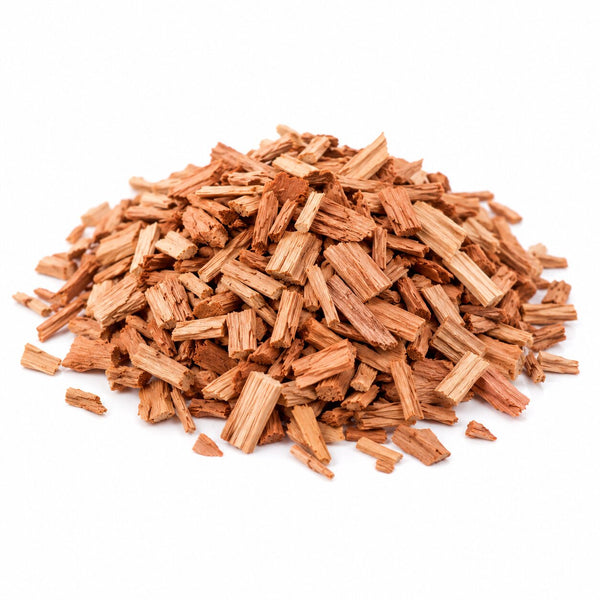
Himalayan Cedarwood Essential Oil
Warm, dry and woody, the timber of the gods. A sacred resinous base note from the high Himalayas.
Origin: Distilled from Cedrus Deodara, the deodar cedar, whose Sanskrit name devadaru means timber of the gods. Native to the western Himalayas across Kashmir, Himachal Pradesh, Uttarakhand and northern Pakistan, where it grows at altitudes between 1500 and 3200 metres.
Aroma: Warm, dry and woody, resinous and softly sweet, like a forest floor.
Known for: A classic grounding base note in perfumery and a natural fixative, loved in aromatherapy for the rooted, settled quality its aroma lends to a blend.
The compound: Rich in sesquiterpenes, the slow-evaporating compounds that give cedarwood its lasting, anchoring depth.
Tradition & spirit: The timber of the gods, used to build Hindu temples across North India and burned as sacred wood at fire ceremonies. Sacred to Shiva, and its forests in Kashmir and Himachal have long been guarded as devban, forests of the gods. Associated with the earth element and the root chakra, a scent of grounding, strength and protection.
Essential OilEarthyGrounding
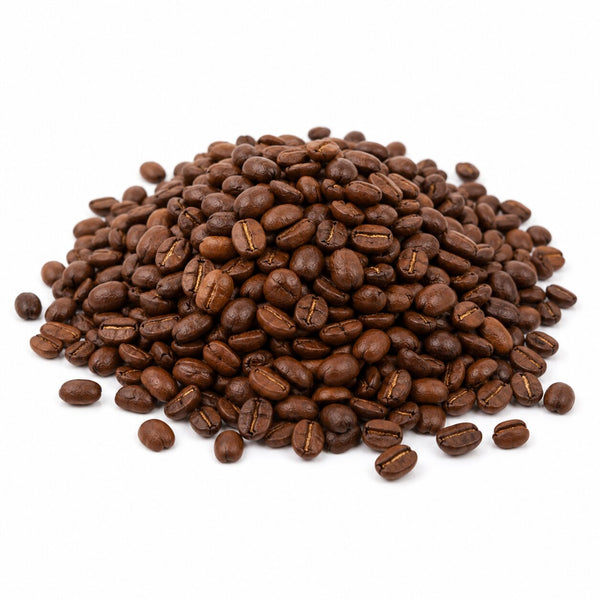
Coffee Essential Oil
Deep, dark and roasted, rich and bittersweet. The scent of focus, gathering and intentional pause.
Origin: A CO2 extract of roasted Coffea Arabica seed, native to the Ethiopian highlands where coffee was first discovered. The aromatic richness of the roasted bean captured in concentrated form.
Aroma: Deep, dark and roasted, rich and bittersweet, unmistakably coffee.
Known for: A striking aromatic in niche perfumery and indulgent body and bath blends, loved for the rich, comforting depth its scent brings to a dark, grounding ritual.
The compound: Carries the roasted aromatic compounds formed during roasting, the source of coffee's familiar deep scent.
Tradition & spirit: Coffee originated in the Kaffa region of Ethiopia, where the legend of the goatherd Kaldi noticing his goats grow lively after eating the cherries gives the plant its origin story. Carried into Yemen by the 15th century, coffee became central to Sufi devotional practice and to the ceremonial Arabic gahwa, where the host prepares and pours it in a ritual of welcome. The scent of focus, gathering and intentional pause.
ResinEarthySacred
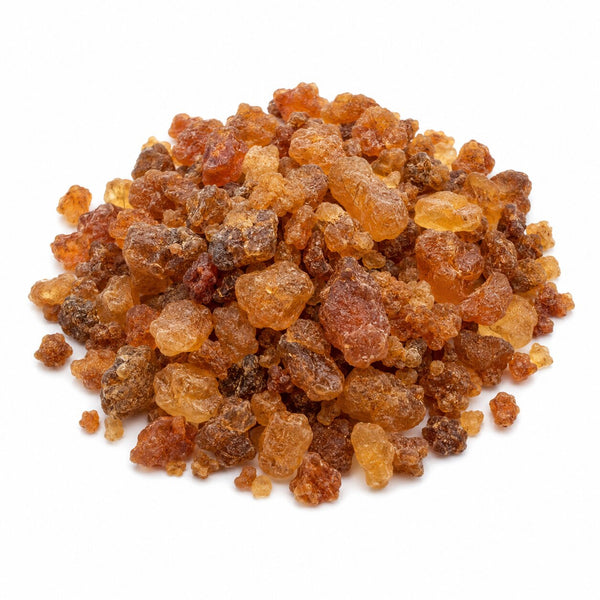
Myrrh Resin
Warm, resinous and balsamic, ancient in feel. One of the oldest traded aromatics in human history.
Origin: Resin of the Commiphora Myrrha tree, native to the arid regions of Somalia, Ethiopia and southern Arabia. One of the oldest traded aromatics in human history, carried along the incense road from Yemen and Oman into the ancient Mediterranean world.
Aroma: Warm, resinous and balsamic, earthy and quietly sweet, ancient in feel.
Known for: A treasured incense and perfumery resin, loved for the ceremonial depth and stillness its aroma brings to a ritual. A classic of sacred and meditative blends across the world.
The compound: Rich in furanosesquiterpenes, the naturally occurring resin compounds behind its deep balsamic warmth.
Tradition & spirit: Used in ancient Egyptian embalming and in the temple incense kyphi; named alongside frankincense among the gifts of the Magi in the Christian Gospel of Matthew; burned in Jewish, Christian and Islamic ritual; and used in Ayurvedic preparation alongside guggul. Associated with Saturn and with the root and crown chakras, a scent of purification, sacred passage and contemplative depth.
ResinSacredGrounding
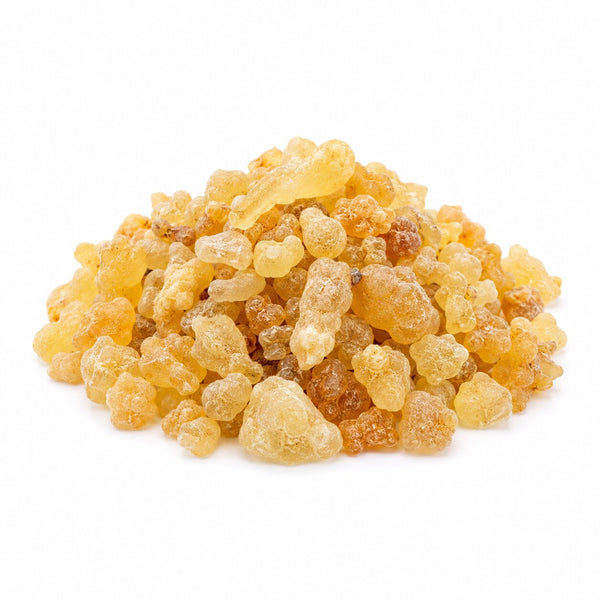
Frankincense Resin
Bright, resinous and citrus-piney, one of the most revered meditation resins in the world. Loban.
Origin: Resin granules from the Boswellia Serrata tree, the Indian frankincense, native to the dry deciduous forests of Rajasthan, Gujarat, Maharashtra, Madhya Pradesh, and the Western Himalayas. Known across India as Loban, Salai or Kundur. Its sister species Boswellia sacra grows in Oman and Yemen.
Aroma: Bright, resinous and citrus-piney, clean and elevating with a balsamic base.
Known for: One of the most revered incense and meditation resins in the world, loved for the centring, sacred quality its aroma brings to a ritual. A classic across nearly every spiritual tradition that burns incense.
The compound: Rich in boswellic acids and alpha-pinene compounds, the naturally occurring resin molecules behind its clear, elevating scent.
Tradition & spirit: Burned as Loban in Indian homes after the evening lamp, as Bakhoor across the Arabian Peninsula and the Gulf, and as frankincense in Christian liturgy from the Coptic and Orthodox to the Catholic. Named in the Old Testament among the temple incenses of Solomon, in the Christian Gospel of Matthew among the gifts of the Magi, and used in Ayurveda as Sallaki for centuries. Associated with the Sun and with the crown chakra, a scent of protection, prayer and sacred space.
MineralGroundingRecovery
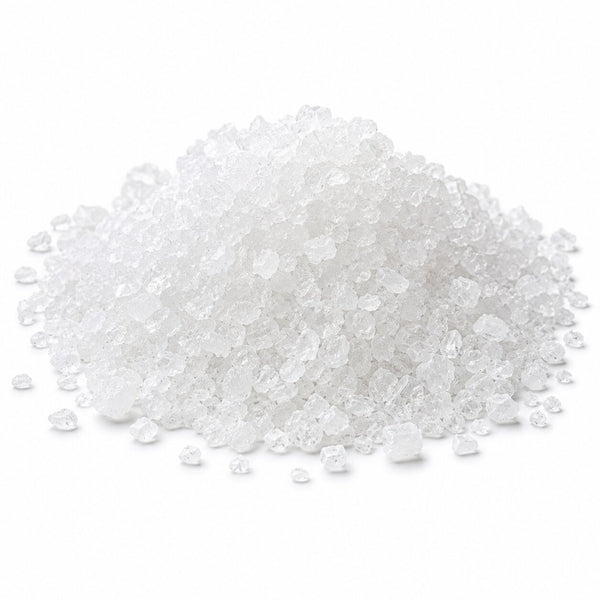
Epsom Salt
The most familiar bath mineral in the world. Silken water, post-workout recovery, and the ritual of release.
Origin: Magnesium sulphate, named for the town in Surrey, England, where it was first drawn from a mineral spring in 1618 by the cowherd Henry Wicker, who noticed his cattle would not drink from a particular pool in a drought summer. Tasting it himself, Wicker founded what became one of England's earliest spa towns.
In the water: Dissolves completely and quickly, no colour, no residue. Leaves the water soft and silken.
Known for: The most familiar bath mineral in the world. A staple of athletic recovery, physiotherapy practice and the post-workout, post-travel, end-of-week soak, and a centuries-old way to mark the close of a long day.
The compound: A simple, naturally occurring mineral salt of magnesium and sulphur. Used worldwide in food, in classical medicine, in modern sports recovery and in fine bath preparations. Pharma-grade in CHALICE, the cleanest available form.
Tradition & spirit: Within decades of Wicker's find, Epsom drew Charles II and Nell Gwyn and became a fashionable resort where the gentry travelled to take the waters. It joined a far older lineage of mineral-spring bathing: Roman thermae across the empire, Japanese onsen built around volcanic springs, the spa towns of Bohemia and Belgium. Salt itself is the oldest purifier in nearly every culture, scattered across thresholds in folk practice and used to bless and cleanse new homes. A mineral of grounding, release and restoration.
MineralGroundingRecovery
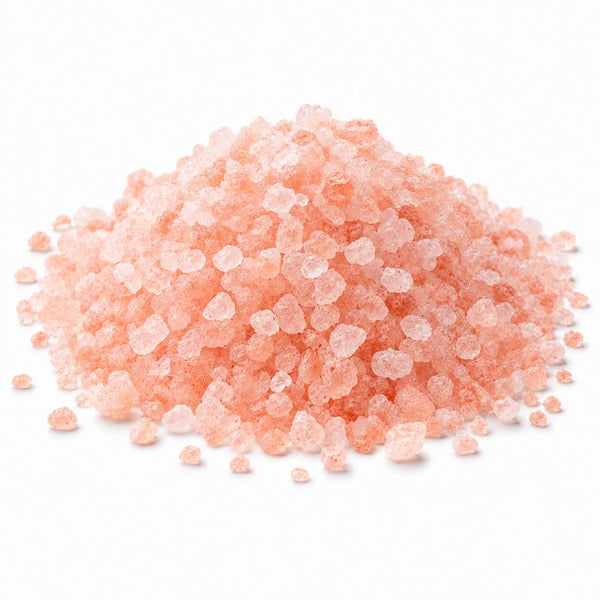
Himalayan Pink Rock Salt
Mined from an ancient sea, hundreds of millions of years old. Mineral-rich and rose-hued, the salt of the ages.
Origin: Mined from the Khewra Salt Mine in the Punjab region of Pakistan, in the foothills of the Salt Range. The deposits date back hundreds of millions of years to an ancient evaporated sea, and trace minerals give the salt its rose-to-amber hue.
In the water: Lends the water a soft warm-toned tint and a gentle mineral character.
Known for: A treasured mineral salt for bathing and body care, and now a staple of gourmet kitchens worldwide. Valued for the mineral-rich, polished-soft feel it leaves on the skin.
The compound: Naturally rich in trace minerals alongside its sodium chloride base, the source of its rose colour.
Tradition & spirit: Archaeological evidence places the use of this salt as far back as the Indus Valley Civilisation, around 4,500 years ago, when it was mined and traded by the people of Harappa and Mohenjo-Daro. A popular legend credits its discovery to the army of Alexander the Great in 326 BCE, whose horses are said to have led them to it by licking the stones near the Jhelum river. Mining was standardised under the Mughal emperor Akbar in the 16th century and continues today through the Room-and-Pillar method introduced in 1827. In Indian ritual practice, salt is offered for purification and to bless new homes, and pink, the colour of the heart, carries an association with the heart chakra and with grounding, prosperity and protection.
MineralBotanicalCalming
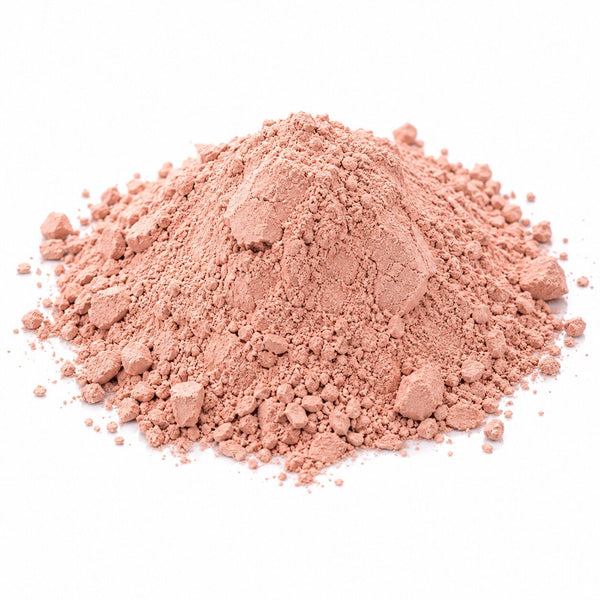
French Pink Clay
The gentlest cosmetic clay, a classic of French beauty tradition. Warm rose tone, silky texture.
Origin: A naturally occurring kaolin clay tinted rose by iron oxide, drawn from mineral-rich deposits in southern France. The gentlest of the cosmetic clays and a classic of French beauty tradition.
In the water: Softens the water and lends it a warm rose tone.
Known for: A classic of fine French skincare, loved in masks, bath blends and luxury soaks for the soft, cared-for feel it leaves on the skin. The mildest of the kaolin family, suited to sensitive use.
The compound: Made of kaolin and iron oxide, the naturally occurring minerals behind its rose colour and silky texture.
Tradition & spirit: Cosmetic clays have been used for cleansing and beautifying since antiquity, from Egyptian Nile mud applied to the skin to Greek and Roman kaolinic clay used at the public baths. French apothecary tradition refined clay into the fine bath and beauty product known today. A Venus and Earth mineral, associated with the heart and root chakras and with gentleness, care and grounding.
MineralPurifyingGrounding
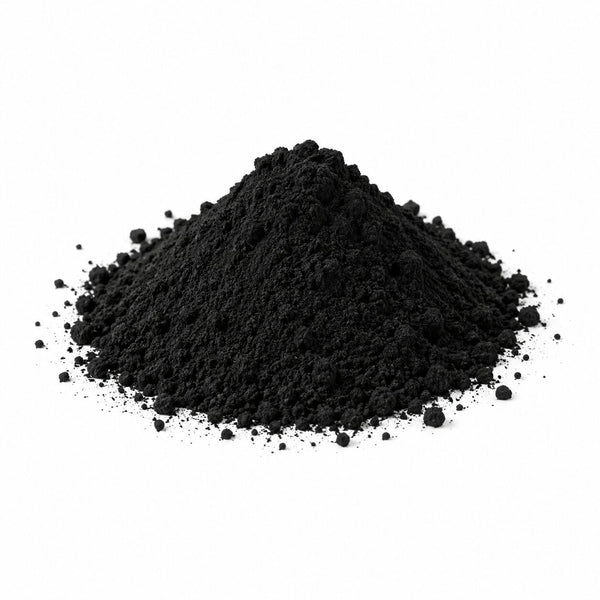
Activated Charcoal
Fine carbon, highly porous, a purifying agent across traditions. Used at trace level for dramatic visual depth.
Origin: Fine carbon, processed to a highly porous form. Used as a purifying agent across many traditions, and now a staple of modern dental, water-purification and skincare practice. In CHALICE it appears at trace level for visual depth and colour.
In the water: Deepens the water to a dark, dramatic tone without staining skin or vessel.
Known for: A popular ingredient in cleansing skincare, toothpaste and water filtration, valued for the deep, clarified feel and the striking dark transformation it brings to a ritual.
The compound: Pure activated carbon, whose porous structure is the source of its long use as a purifier.
Tradition & spirit: Egyptian and Phoenician records mention charred materials used to purify water on long sea voyages. In alchemical symbolism the colour black represents nigredo, the blackening that precedes transformation and gold, the first stage of the great work. Associated with Saturn and the root chakra, a visual of release, purification and renewal.
BotanicalFloralCalming
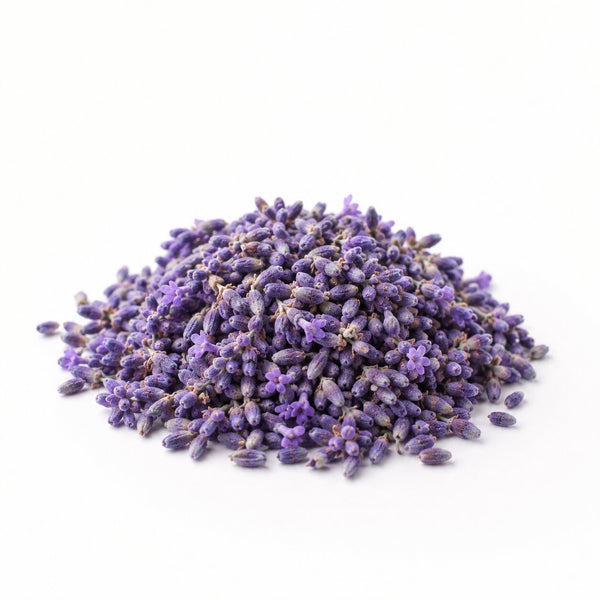
Lavender Buds
Whole dried buds, the flower in its natural form. Soft purple flecks and a quiet secondary scent.
Origin: Whole dried buds of true lavender, Lavandula Angustifolia, the flower in its natural form rather than its distilled oil. The buds release scent slowly in warm water and stay visually present through the soak.
In the water: Release a soft secondary lavender scent and float as gentle purple flecks across the surface.
Known for: A classic ritual and bath botanical, loved for the calming visual and quiet fragrance they bring to a soak. A favourite ingredient in sachets, pillow blends and traditional dry baths across France and England.
The compound: Carry the same naturally occurring linalool as the oil, released gradually in warm water.
Tradition & spirit: In Provence, lavender buds have been tied into sachets and tucked into linen cupboards for generations, their scent thought to keep moths away and ward off ill intent. In Tudor and Elizabethan England, the buds were strewn on bedroom floors and sewn into pillows to encourage rest. In Mediterranean folk practice, sprigs were hung at thresholds with the old belief that evil cannot dwell where lavender grows. Linked to the Moon and to the crown and third eye, a botanical of calm, cleansing and peaceful sleep.
BotanicalFloralRomantic
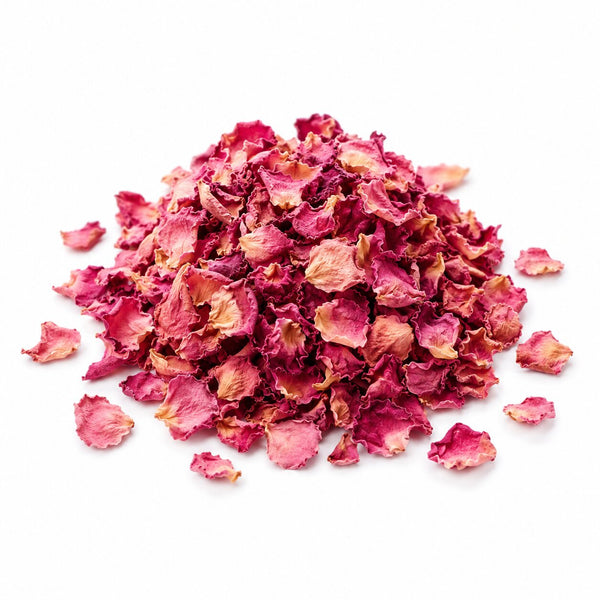
Dried Rose Petals
Whole dried petals of Rosa Centifolia, the hundred-petalled rose. Romance and ritual in every soak.
Origin: Whole dried petals of Rosa Centifolia, the hundred-petalled rose, cultivated in the gardens of Provence and the Mughal gardens of North India for centuries. The classic petal of perfumery and gulkand.
In the water: Drift across the surface and lend a soft, romantic floral note.
Known for: A beloved botanical for baths, attars and beauty rituals across India, Persia and Europe. Loved for the visual beauty and gentle fragrance they bring to a soak.
The compound: Carry the natural aromatic compounds of rose alongside skin-loving plant flavonoids.
Tradition & spirit: The rose is a near-universal symbol of love and devotion: scattered on bridal beds in Roman tradition, distilled into rose water in Mughal India and Persia for both kitchen and prayer, and sacred to Mary in Christian tradition and to the Sufi poets who wrote of the rose and the nightingale. Associated with Venus and the heart chakra, scattered in ritual baths as a botanical of love, beauty and the heart.
BotanicalFloralWarming
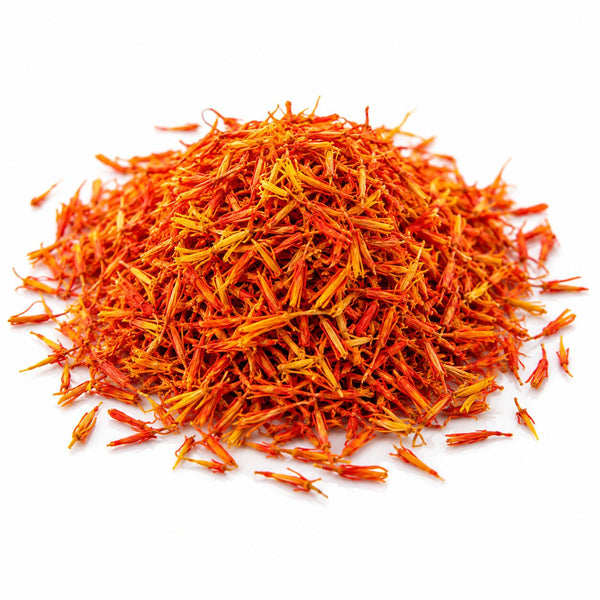
Marigold Petals
Bright golden petals of India's temple flower, Tagetes Erecta. The classic flower of festival and welcome.
Origin: Dried petals of Tagetes Erecta, the African or Aztec marigold, native to Mexico and carried into India by Portuguese traders in the 16th century, where it became the temple garland flower of the subcontinent.
In the water: Float as bright golden petals and lend the water a warm tint.
Known for: A vivid ritual botanical, loved for the golden colour and celebratory feel it brings to a soak. The classic flower of Indian festivals, doorways and welcome.
The compound: Rich in carotenoid pigments, the naturally occurring compounds behind its deep gold colour.
Tradition & spirit: In Mesoamerica, the cempasuchil marigold has been central to Aztec and present-day Mexican Dia de los Muertos rituals for centuries, its colour and scent believed to guide ancestors home. In India, marigold garlands are strung across doorways at Diwali, at weddings, and at every festival of welcome, and offered to Lakshmi, Vishnu, Ganesha and Surya. Associated with the Sun and the solar plexus chakra, a botanical of auspiciousness, abundance and welcome.
BotanicalFloralWarming
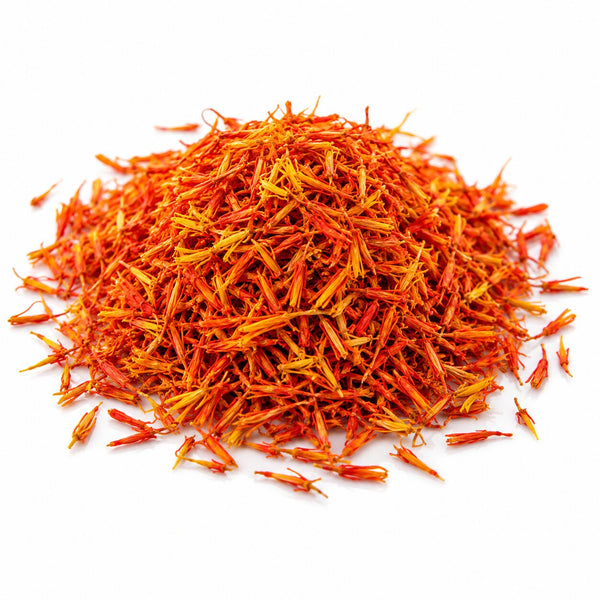
Safflower Petals
Dried petals of Carthamus Tinctorius, the golden dye flower of Pharaonic Egypt. Warm amber in every drop.
Origin: Dried petals of Carthamus Tinctorius, an ancient cultivated plant whose flowers have been used as a golden dye and a stand-in for precious saffron since at least the time of Pharaonic Egypt. Grown today across India, Iran and the Mediterranean.
In the water: Release a warm amber-gold colour into the water.
Known for: A traditional natural colourant and ritual botanical, loved for the golden, abundant tone it lends a soak. A historical fabric and food dye and a saffron substitute in cooking.
The compound: Rich in carthamin, the naturally occurring pigment behind its warm golden release.
Tradition & spirit: Safflower garlands have been found in Egyptian tombs including that of Tutankhamun, where they were laid to bring colour and warmth to the afterlife. The flower has long served as the affordable golden stand-in for saffron in ritual offerings across India and Persia. A Jupiter-Sun botanical associated with the solar plexus chakra, a flower of warmth, abundance and prosperity.
BotanicalFloralCalming
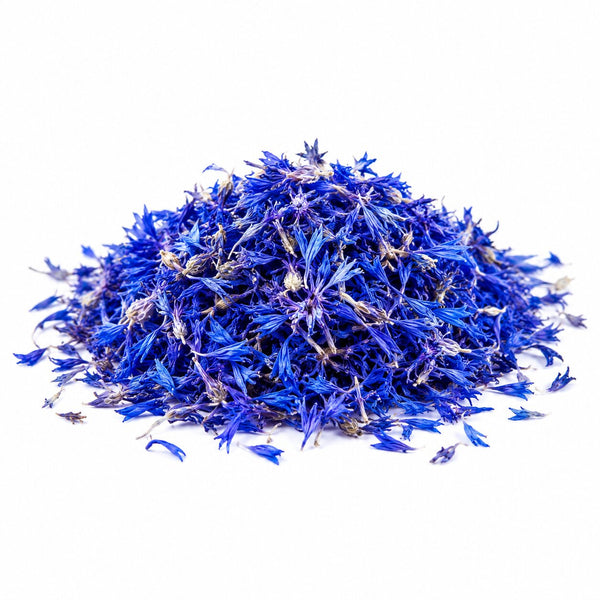
Blue Cornflower
Dried flowers of Centaurea Cyanus, the true-blue bloom of old European wheat fields. Calm, pretty grace.
Origin: Dried flowers of Centaurea Cyanus, the true-blue bloom of old European wheat fields, once so common in the grain harvest that it was named the field weed of poets. A classic of gentle French herbal tradition.
In the water: Unfold as soft blue petals across the surface.
Known for: A gentle botanical favoured in soothing skincare, in eye-care infusions and in ritual baths, loved for the calm, pretty visual it brings to a soak.
The compound: Rich in anthocyanins and flavonoids, the naturally occurring plant compounds behind its blue colour.
Tradition & spirit: In 19th and 20th-century France, the cornflower, the bleuet, became a token of remembrance and gentle hope worn as a flower of memory after the First World War. In Victorian flower-language it stood for delicacy and singleness of purpose. A Venus-aligned flower associated with the throat and third eye, a botanical of calm, clarity and quiet grace.
BotanicalSpiceWarming
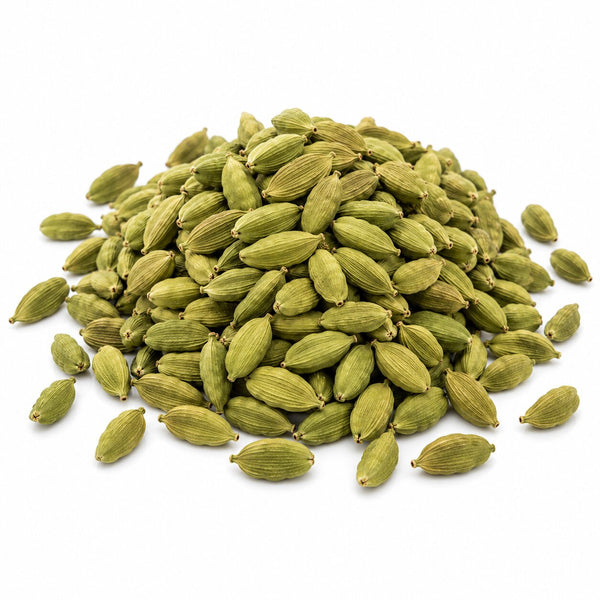
Green Cardamom Pods
Whole pods of the queen of spices, warming, welcoming and slowly aromatic in a ritual bath.
Origin: Whole green pods of Elettaria Cardamomum, the queen of spices, in their natural form. Native to the evergreen forests of the Western Ghats and now grown across Kerala, Tamil Nadu, Karnataka, Sri Lanka and Guatemala.
In the water: Release their warm, sweet spice slowly as they steep.
Known for: A fragrant whole spice for ritual baths, masala chai and slow infusions, loved for the warming, welcoming aroma it unfolds in warm water.
The compound: Hold the same naturally occurring cineole and terpinyl acetate as the oil, released gradually.
Tradition & spirit: The after-meal mukhwas spice across India, offered at the close of a meal as a freshener and a gesture of hospitality. Central to Arabic gahwa coffee, where the host crushes the pod into the pot in a ritual of welcome. In Jyotish tradition, Brihaspati's Jupiter spice, associated with the solar plexus chakra, a spice of warmth, generosity and welcome.
BotanicalSpiceWarming
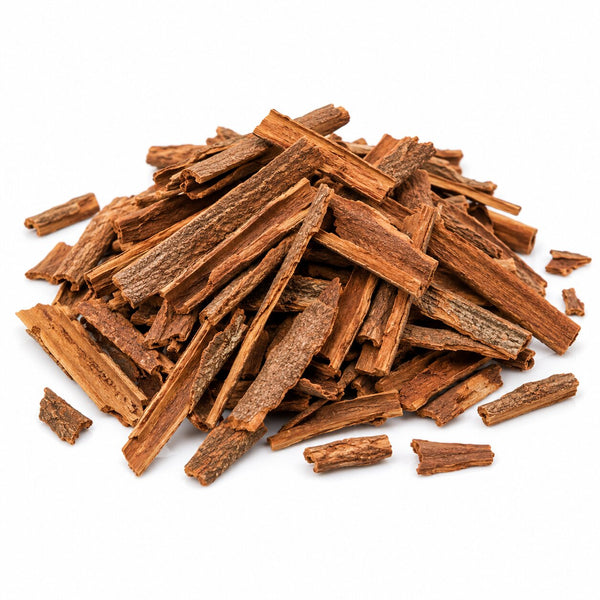
Cinnamon Bark
True Ceylon cinnamon, one of the oldest and most treasured spices in the world. Warm, sweet, abundant.
Origin: Cut bark of Cinnamomum Zeylanicum, true Ceylon cinnamon, native to Sri Lanka and one of the oldest and most treasured spices in the world. Distinct from the harsher cassia cinnamon, true cinnamon is softer and sweeter in flavour.
In the water: Releases a warm, sweet-woody spice as it steeps, without staining.
Known for: A classic warming spice for ritual baths, mulled drinks and infusions, loved for the cosy, abundant warmth its aroma brings to a soak. A foundation of bakery, masala chai and the world's spice trade.
The compound: Rich in cinnamaldehyde, the naturally occurring compound behind its warm, sweet scent.
Tradition & spirit: Cinnamon was carried into ancient Egypt for embalming and into Solomon's temple incense, and its trade routes from Sri Lanka shaped the early spice economy of the world. In Indian ritual it is the warming spice of Lakshmi puja and is added to sweets at festivals and weddings as a sign of abundance. Associated with the Sun and the sacral chakra, a spice of warmth, wealth and welcome.
BotanicalSpiceSacred
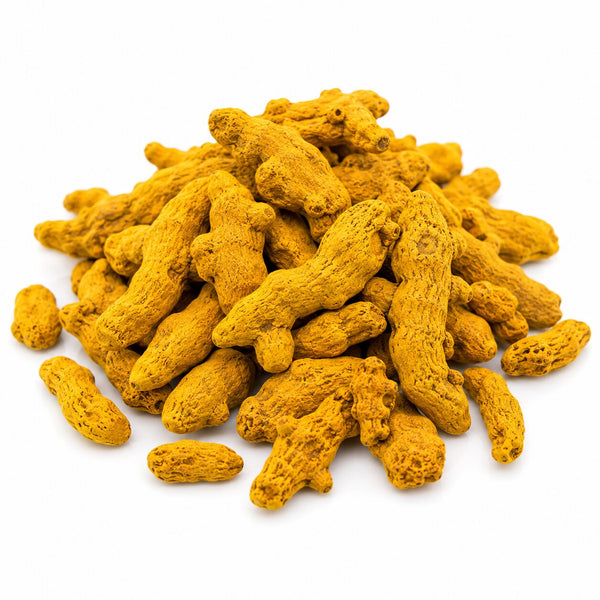
Kasturi Turmeric
The aromatic wild turmeric of Indian bridal ritual, golden, auspicious and non-staining. Haldi.
Origin: The aromatic wild turmeric Curcuma Aromatica, distinct from culinary haldi and prized in Indian beauty ritual because it does not stain skin or vessel. Native to South and Southeast Asia.
In the water: Lends a soft golden, auspicious tint and a warm earthy note.
Known for: A treasured beauty and bridal botanical across India, used in haldi ceremonies and ubtan preparations, loved for the golden, ceremonial glow it brings to a ritual without the stain of cooking turmeric.
The compound: Rich in aromatic turmerones, the naturally occurring compounds that distinguish it from culinary turmeric.
Tradition & spirit: The haldi of the pre-wedding ceremony across nearly every Indian community, applied as a paste to bride and groom for the golden glow and the blessing of new beginnings. A botanical of Lakshmi, used in beauty preparations recorded in classical Indian ubtan traditions. Associated with the Sun and the solar plexus chakra, a botanical of auspiciousness, purity and abundance.
BotanicalHerbalSacred
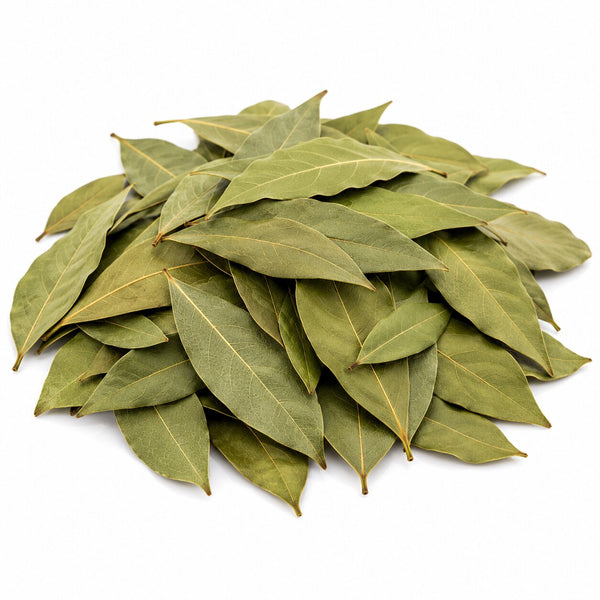
Bay Leaves
The laurel of antiquity, warm, herbal and ceremonial. The leaf that crowned victors and makes wishes.
Origin: Whole dried leaves of Laurus Nobilis, the laurel of antiquity, native to the Mediterranean and woven into the victory crowns of ancient Greece and Rome.
In the water: Release a soft, warm herbal note as they steep.
Known for: A classic ritual and culinary leaf, loved for the grounding, ceremonial character it brings to an infusion or soak. A foundation of European cooking and an ancient ritual aromatic.
The compound: Rich in 1,8-cineole, the naturally occurring compound behind its warm herbal scent.
Tradition & spirit: The laurel wreath of Apollo crowned the victors at the Pythian and Olympic games of ancient Greece, and the laureate poets and emperors of Rome. In modern Mediterranean folk practice, bay leaves are written on with wishes and burned for manifestation. A Sun botanical associated with achievement, abundance and the crown of success.
BotanicalEarthySacred
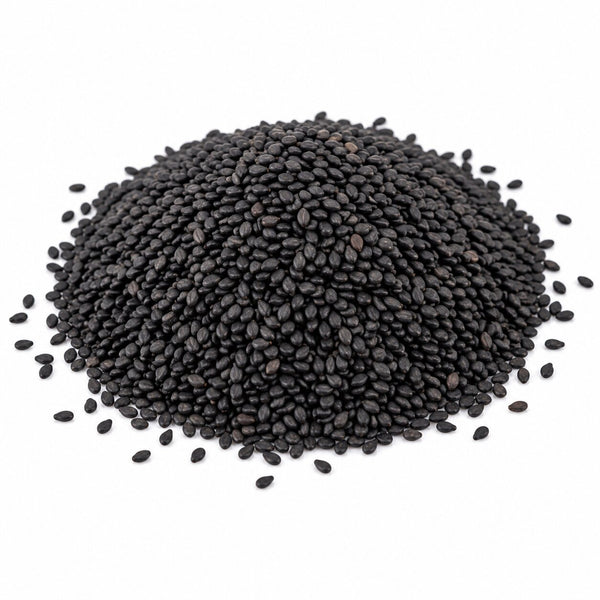
Black Sesame Seeds
Til, one of the oldest cultivated seeds in history. Sacred to Shani Dev, offered at auspicious transitions.
Origin: Whole black sesame seeds, til, one of the oldest cultivated seeds in human history, with archaeological evidence of its use in the Indus Valley around 5,500 years ago. Native to the Indian subcontinent and central to South Asian cuisine, oil-pressing and ritual.
In the water: Scatter as fine dark specks through the water.
Known for: A traditional ritual seed and the source of sesame oil, one of the world's earliest cultivated oils. Carried into baths and rituals for the grounded, ceremonial intention it represents.
The compound: Naturally rich in skin-conditioning seed oils within the whole seed.
Tradition & spirit: Til daan, the offering of sesame seeds to Shani Dev on Saturday, is one of the most established practices in Vedic ritual, given to honour endings and to release karmic weight. Til is also offered on Makar Sankranti at the turn of the sun's northward journey, and at shraddha rites for ancestors. Associated with Saturn and the root chakra, a seed of grounding, release and protection.
BotanicalHerbalPurifying
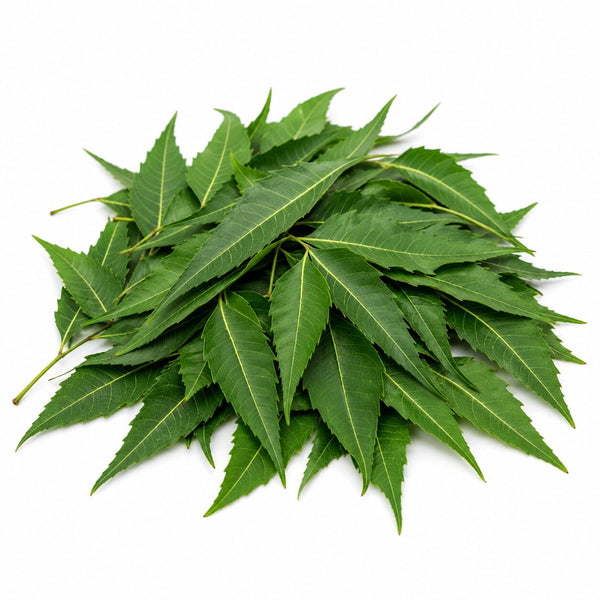
Neem Leaves
The village pharmacy tree of India, nimba, the giver of good health. Purifying, protective, ancient.
Origin: Dried cut leaves of Azadirachta Indica, the village pharmacy tree of India, native to the subcontinent and planted at homes, temples and village squares for its protective presence and cooling shade. The Sanskrit name is nimba, the giver of good health.
In the water: Release a clean, bitter-green note as they steep.
Known for: One of the most revered purifying botanicals in Indian tradition, and a foundation of Ayurveda and rural daily life. Used in soaps, hair oils and skincare across the subcontinent. Carried into baths for the clarified, cleansed feel it represents.
The compound: Rich in naturally occurring limonoids, the bitter plant compounds neem is known for.
Tradition & spirit: Sacred to Goddess Durga and to Shitala Devi in folk Hinduism, with neem branches placed at doorways at Gudi Padwa and Ugadi to mark the new year and ward against illness. The deities of the Jagannath temple at Puri are carved from neem wood. Neem twigs have served as toothbrushes across rural India for centuries, the original daatun. In Jyotish tradition associated with Saturn and Ketu, a leaf of protection, clearing and renewal.
EarthyGrounding
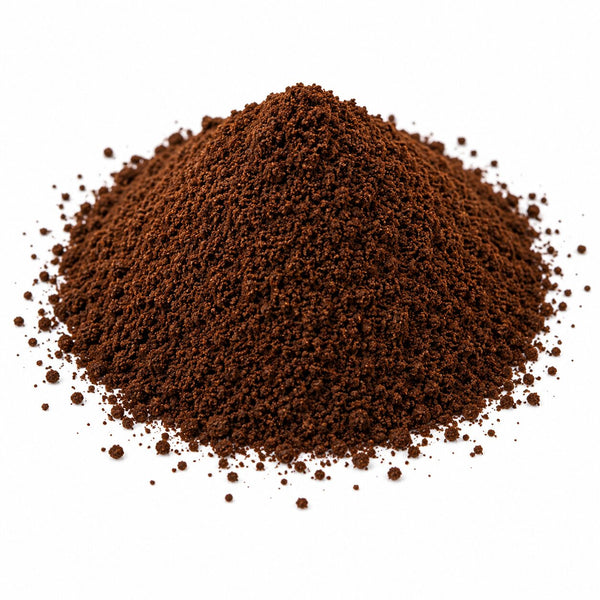
Roasted Coffee Powder
Finely ground Arabica, rich, roasted and dramatic. Turns the water dark and the ritual intentional.
Origin: Finely roasted and ground Coffea Arabica seed, native to the highlands of Ethiopia and now grown across Ethiopia, Yemen, India and Latin America. The bean that built the world's coffee houses.
In the water: Turns the water deep and dark and releases a rich roasted scent.
Known for: A popular ingredient in invigorating body scrubs and bath rituals, loved for the rich aroma and dramatic dark transformation it brings to a soak. The everyday drink of focus and gathering.
The compound: Carries the roasted aromatic compounds and natural antioxidants formed during roasting.
Tradition & spirit: Coffee was first cultivated in the Kaffa region of Ethiopia, then carried to Yemen in the 15th century, where Sufi orders brewed it to stay awake for night-long devotions. From Yemen the bean travelled to the coffee houses of Istanbul, Cairo, Vienna and London, reshaping public life along the way. Associated with Saturn and discipline and with the root chakra, a scent of grounding, focus and deliberate endings.
SacredGrounding
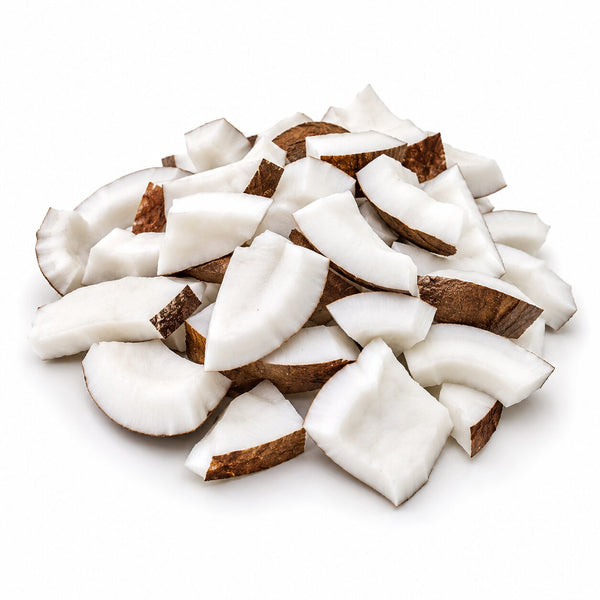
Coconut Oil
Shriphal, the fruit of Lakshmi herself. Carries the blends, softens the skin and blesses the start.
Origin: Food-grade refined oil pressed from the coconut, Cocos Nucifera, cultivated across the tropical coasts of India, Southeast Asia, the Pacific and the Caribbean. Refined for a clean, neutral character that carries other ingredients without competing with them.
In the water: Carries the aromatic oils evenly through the soak and leaves the skin soft after, not tight.
Known for: One of the most loved skin and hair oils in the world, valued across Indian and Southeast Asian beauty tradition and in modern bath and body care for the soft, nourished feel it leaves behind.
The compound: Rich in naturally occurring fatty acids that make it a gentle, skin-loving carrier.
Tradition & spirit: In Hindu tradition, the coconut is Shriphal, the fruit of Shri, of Lakshmi herself, and the most consistently auspicious offering across every Indian ritual. A coconut is broken at the start of a new venture, a new home, a wedding, a temple visit and a journey: the hard shell signifying ego, the soft white inside signifying purity, and the breaking itself the surrender of the small self to the larger one. Said in the Puranic tradition to embody the trinity of Brahma, Vishnu and Mahesh. A fruit of auspicious beginnings, abundance and protection.
Essential OilSweetCalming
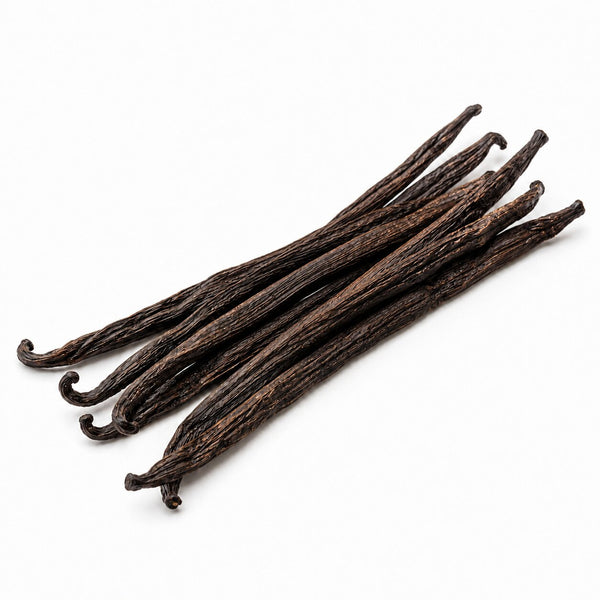
Vanilla
Warm, sweet and comforting, one of the most beloved scents in the world. The recondite flower.
Origin: Cured pods of the Vanilla Planifolia orchid, native to the rainforests of Veracruz on Mexico's Gulf coast. One of the most labour-intensive crops in the world: each flower must be hand-pollinated and the pods cured for months to develop their aroma.
Aroma: Warm, sweet and comforting, soft and enveloping with a deep balsamic base.
Known for: One of the most beloved scents in the world and a classic of comforting perfumery and body care, loved for the soft warmth and ease its aroma brings to a ritual.
The compound: Rich in vanillin, the naturally occurring compound behind its sweet, soothing scent.
Tradition & spirit: Vanilla was first cultivated by the Totonac people of Veracruz, who called it caxixanath, the recondite flower, and considered it a gift from the gods. Totonac legend traces it to the blood of Princess Xanat, the daughter of a king, who fled to the forest with her mortal lover. After the Aztec Triple Alliance conquered the Totonacs in 1427, they renamed it tlilxochitl, black flower, and demanded it as tribute. Aztec royalty blended it with cacao to make xocolatl, the original chocolate drink, reserved for the emperor's court. Associated with Venus and the sacral chakra, a scent of comfort, warmth and gentle sweetness.
BotanicalHerbalCalming
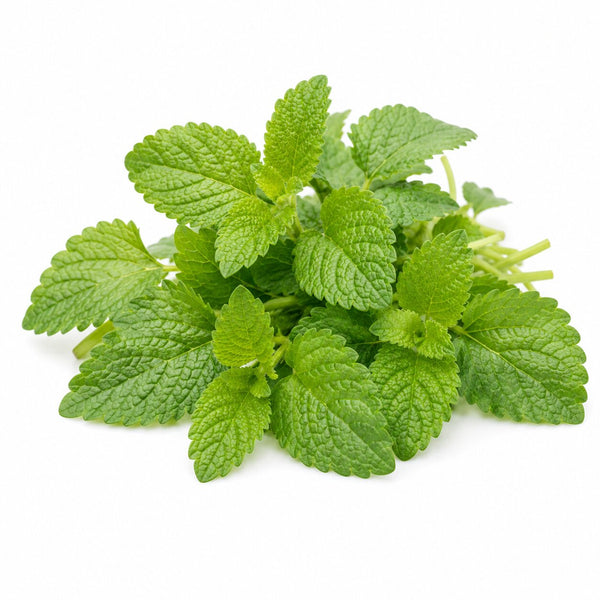
Lemon Balm
Melissa Officinalis, the honeybee herb. Soft, fresh and lemony, with a honeyed edge and a gentle soul.
Origin: Dried leaves of Melissa Officinalis, a lemon-scented member of the mint family native to southern Europe and the Mediterranean. Grown in herb gardens since antiquity, and a classic of the European cottage garden.
Aroma: Soft, fresh and lemony, gentle and green with a honeyed edge.
Known for: A cherished herb-garden plant and a gentle, uplifting note in aromatherapy and herbal teas, loved for the light, soothing brightness its scent brings to a ritual.
The compound: Rich in citronellal and geranial, the naturally occurring compounds behind its soft lemon scent.
Tradition & spirit: The name Melissa comes from the Greek word for honeybee, and the plant has been grown near hives since classical times because bees are drawn to it. The Renaissance physician Paracelsus called it the elixir of life. Carmelite nuns in 17th-century France distilled it into Eau de Melisse des Carmes, a herbal water still made today. Associated with the Moon and the heart chakra, a herb of comfort, calm and kindness.